Accounts and identity
Platform sign-in, guest-to-account upgrades, account linking, profiles, permissions and privacy-aware player data, including deletion and export requests.
GAME BACKEND DEVELOPMENT
Custom game backends for player accounts, progression, inventory and live operations, integrated with your game and operated the way your team needs.
WHAT WE BUILD
We develop custom game backends for studios building an online game or improving an existing service. Scope can cover player accounts, progression, inventory and live operations, with integration and operational ownership defined around your game. Each capability below is scoped only when your game needs it.
Platform sign-in, guest-to-account upgrades, account linking, profiles, permissions and privacy-aware player data, including deletion and export requests.
Cloud saves, experience, unlocks and rewards, with explicit rules for conflicts between devices, sessions and client versions.
Items, currencies, entitlements and purchase grants validated on the server, applied through idempotent transactions and recorded in an auditable history.
Leaderboards, friends, groups or clans where the game design calls for them, with abuse and moderation needs considered up front.
Remote settings, events, offers, feature flags and content metadata delivered per client version, with controlled rollout and rollback.
Structured game events, dashboards, support actions and traceable admin tools so live teams can answer player questions without database access.
EXISTING BACKENDS
Many projects start with a backend that already holds real players. We plan changes around that state instead of assuming a clean start.
New features are added behind versioned endpoints next to the existing service, so released clients keep working while new builds adopt the new contract.
We map the data model, identities and purchase history, then move features or player cohorts in stages with a verified rollback path at each step.
Old and new client builds overlap in production. Contracts, deprecation windows and server-side defaults are defined so that a store-review delay does not break the game.
This service covers persistent player services. Authoritative realtime match simulation belongs to multiplayer development, and running server fleets belongs to dedicated server hosting; we connect them through explicit contracts.
Multiplayer developmentARCHITECTURE EXAMPLE
A simplified example of a typical online game. The exact components depend on the game, the expected load and the team that will operate it.
Calls a versioned API and never decides valuable outcomes on its own.
Exchanges platform or account credentials for a short-lived session token.
Validates requests, applies rate limits and keeps contracts compatible across builds.
Accounts, progression, inventory, economy and configuration with server-side rules.
Transactional storage, caches and an event history for audits and analytics.
Telemetry, admin tools, deployment, alerts and recovery procedures.
Conceptual example. Authoritative realtime game servers run beside this stack, not inside it: they simulate the match, then report results to the player services through a trusted server-to-server API.
INTEGRATION & RELIABILITY
Typed request and error schemas, documented in a form your client developers can use, with compatibility rules for every released build.
The server decides grants, spends and progression. Client input is treated as a request, not as a result.
Request keys ensure that a retried reward or purchase is applied once, even after timeouts or reconnects.
Timeouts, degraded modes, queued work and clear client behavior when a dependency is unavailable.
You own the player data and accounts. Storage location, retention, export and deletion are agreed and documented.
HOW WE WORK
We map player actions and state ownership before selecting services or data stores, then deliver one integrated slice before scaling the feature list.
Identify valuable data, consistency needs, trust boundaries, platforms, expected load and who will operate the system.
Specify requests, events, errors, idempotency and compatibility so client and backend work can proceed in parallel.
One feature, for example sign-in with cloud save, running end to end from the game client to a production-like environment.
Further features with telemetry and admin needs included, tested against duplicate requests, dependency failure, migrations and burst traffic.
Documentation, runbooks and dashboards for your team, or continued operation under an agreed managed-hosting scope.
DELIVERABLES
The result is an operable service boundary with source, deployment and data ownership made clear.
TEAM EVIDENCE
Projects include original Backend Alchemist productions and work delivered by current team members in previous studio, leadership and contract roles. Each project page states the team's contribution.
Avander VR / Mentis
Team experience delivering a cloud backend with content management and media processing behind a VR client and browser editor, used in industrial training programs.
View projectRunofstone
Team experience building realtime PvP systems with progression, collections and clans in a connected strategy game.
View project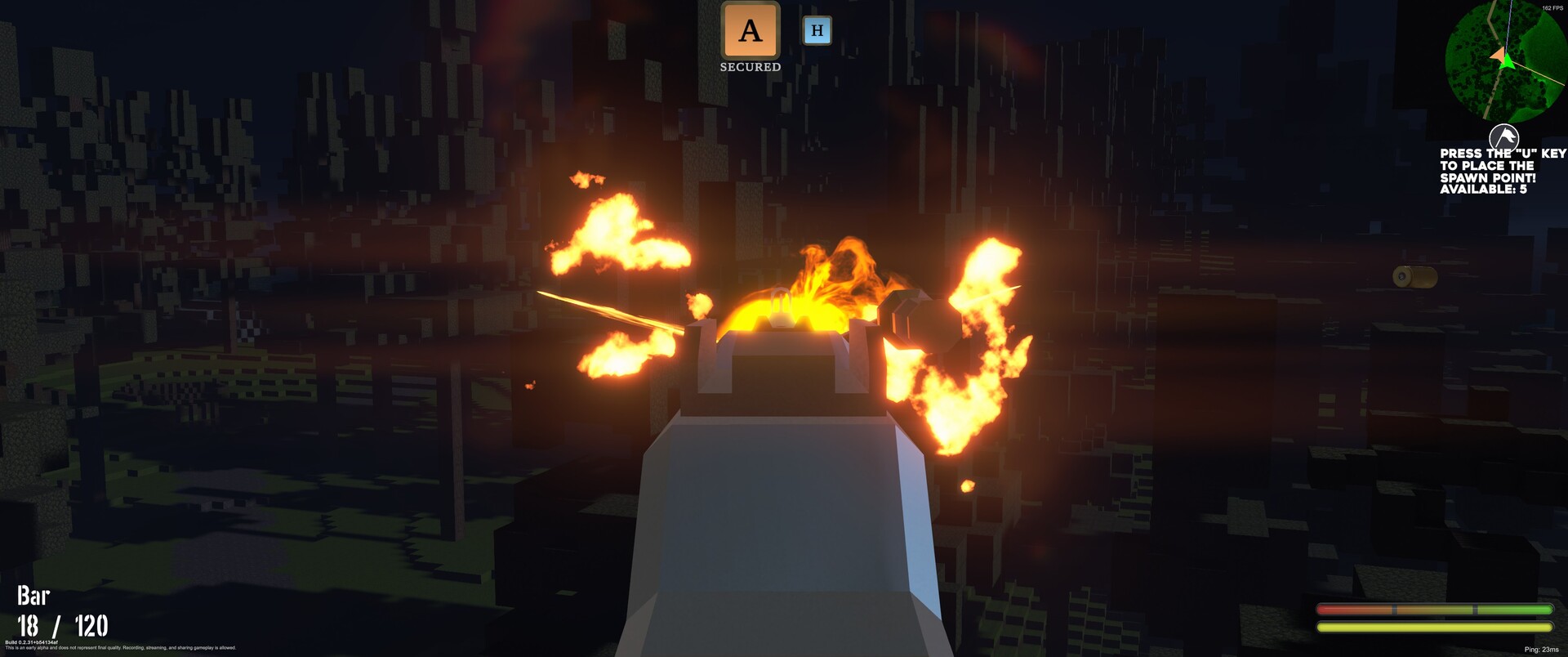
Bad Goons
Our original production in active development: authoritative dedicated servers and containerized deployment, the realtime counterpart to persistent player services.
View projectCOST & TIMELINE
We do not publish fixed starting prices, because two backends with the same feature names can differ by an order of magnitude in effort. These factors drive the estimate.
A short discovery conversation is usually enough to produce a written scope with stated assumptions and an estimate range.
FAQ
Yes, usually incrementally. We identify stable seams, introduce versioned contracts and migrate state or traffic in controlled stages where the current system permits it. A full rewrite is proposed only when incremental change would cost more.
Unity is our main client engine, but the backend exposes engine-independent contracts, so other clients can integrate through the same API. Platform sign-in and store integrations are scoped per platform.
Ownership and licensing are agreed in the contract. Handover normally includes the source, infrastructure configuration, documentation and full access to the player data.
A managed platform can be the faster choice when its features match your game. A custom backend makes sense when you need game-specific rules, control over data and hosting, or predictable cost at scale. We can assess the trade-off for your game, including a hybrid approach.
Yes, under an agreed managed-hosting scope with defined responsibilities, or we hand over to your team with runbooks, dashboards and deployment pipelines.
The game genre and platforms, the player features you need, any existing backend or data, expected player numbers if known, the target launch window and who will run the system. A design document helps but is not required.
Valuable operations use explicit transaction and idempotency rules, authoritative validation and an audit trail suitable for investigation.
NEXT STEP
A technical lead will review the current state and recommend the smallest useful next step.
Start a project