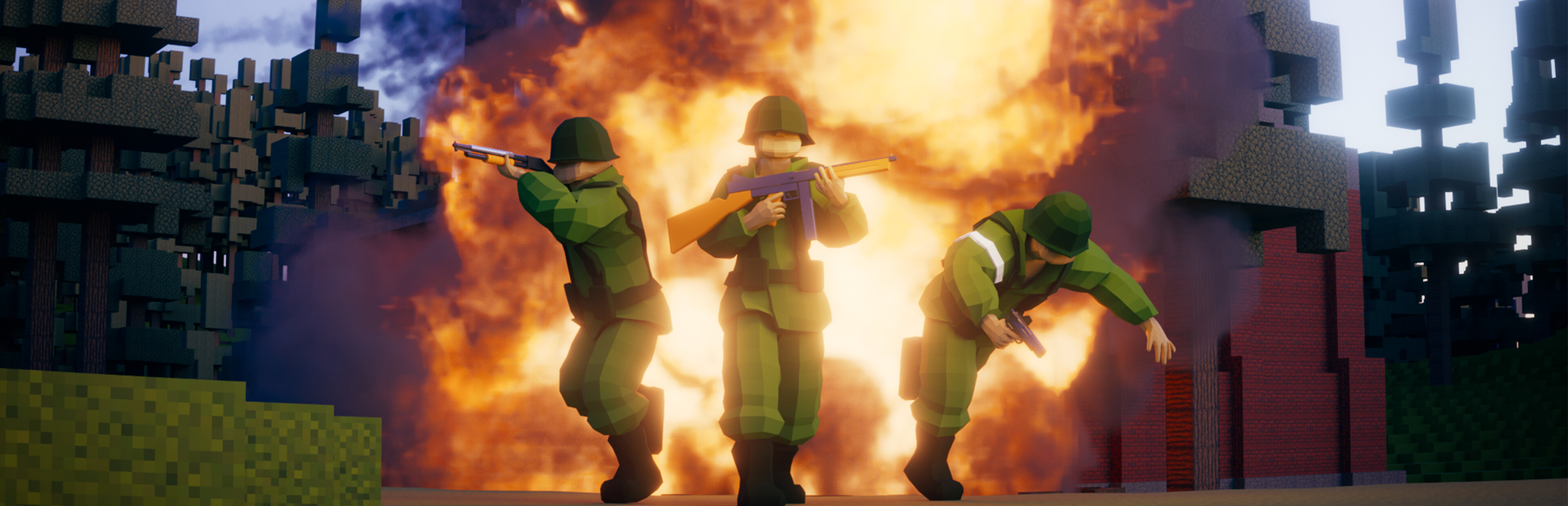
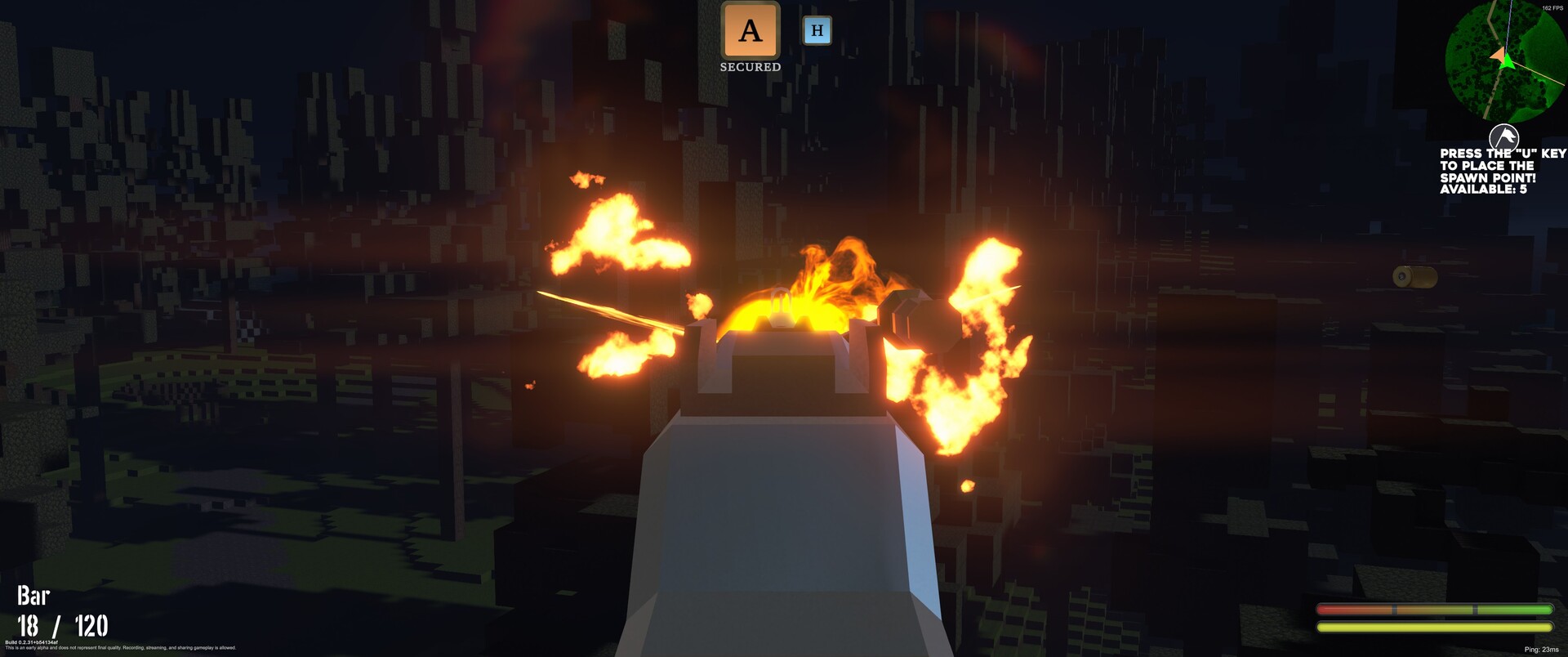
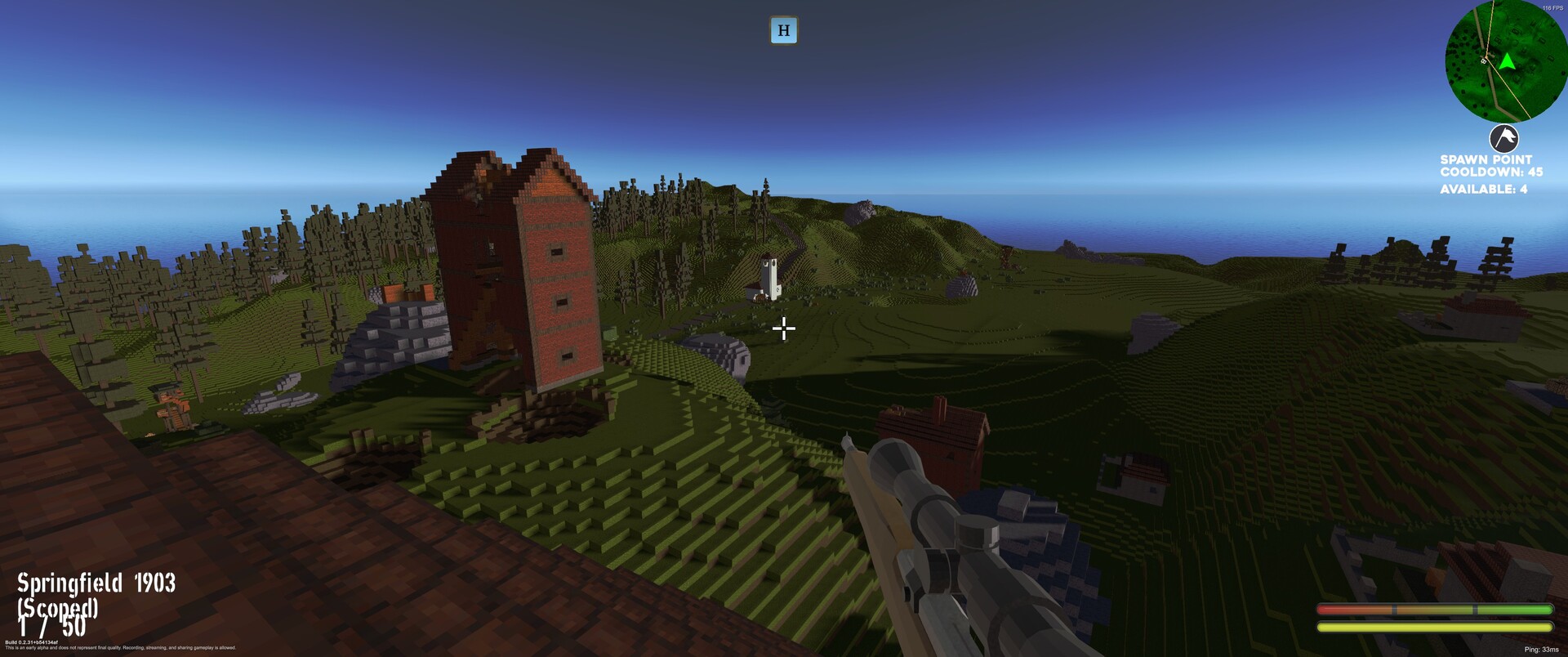
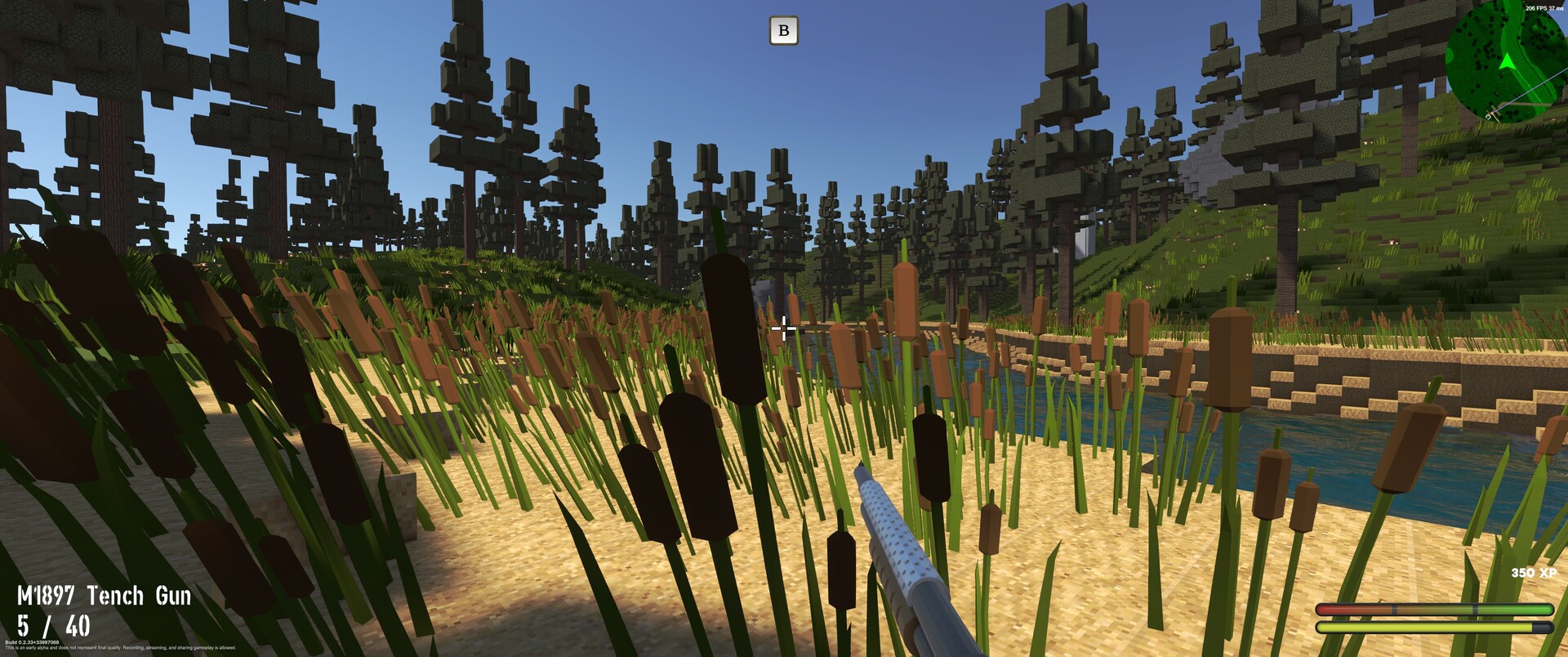
A flagship multiplayer FPS built around a battlefield players can destroy, excavate and rebuild during every match. Fully networked voxel destruction, dynamic capture points, construction and fortification, deployable spawn networks, procedural maps, tactical support assets and a broad arsenal create shifting front lines instead of static cover. The playable Early Access build is in active development toward its planned December 2026 Steam release, supported by shared developer-and-community playtests.
Bad Goons is a team-based multiplayer shooter built around a simple principle: the map should never remain static. Players can dig trenches, destroy defensive positions, create new routes and reshape the frontline throughout the match.
The Unity client, voxel simulation, multiplayer model, dedicated servers and cloud deployment are designed as separate systems connected through one shared technical architecture. The current design targets 64-player battles across a shifting frontline.
IN-GAME
THE CORE CHALLENGE
Synchronizing a world that every player can change.
Movement and combat must remain responsive while terrain destruction, excavation, construction, projectiles and tactical state are synchronized across many connected clients.
PLAYER-FACING DEVELOPMENT
The experience players see, feel and control.
First-person movement, combat and weapon handling
Dynamic voxel terrain, digging and trench creation
Destructible cover and deployable fortifications
Team spawn, resource and supply systems
Tactical UI, reactive audio and battlefield feedback
Performance profiling and production tooling
MULTIPLAYER & BACKEND
The systems that keep the battle authoritative and connected.
Client/server prediction and state reconciliation
Authoritative dedicated server simulation
Terrain-change, player and team-state replication
Session lifecycle, reconnect and recovery workflows
Headless Linux builds and containerized deployment
Diagnostics, monitoring and version-controlled releases
TECHNICAL ARCHITECTURE
One production system, with explicit ownership at every layer.
01 · CLIENT
Unity 6
Input, presentation, rendering, audio and predicted player actions.
02 · REALTIME
FishNet
Authority, prediction, reconciliation and synchronized gameplay systems.
03 · WORLD
Voxel simulation
Player-created trenches, altered cover and evolving combat routes.
04 · SERVER
Linux headless
Authoritative players, combat, terrain and shared world state.
05 · DEPLOYMENT
Docker
Configurable server packaging, releases, regions and runtime settings.
06 · OPERATIONS
Cloud infrastructure
Health monitoring, diagnostics, automation and demand-led capacity.
Built as a production game, not a technical showcase.
Bad Goons is currently in active development. Core work includes multiplayer combat, dynamic terrain, dedicated-server deployment, tactical spawn systems and production tooling. It is both an original commercial game and a real-world proving ground for our Unity, multiplayer, server and cloud capabilities.
ENGINEERING BEHIND THE GAME
The services this production demonstrates
Bad Goons is in active development, so this page describes the current development build rather than live-service results. 64 players is the design target, not a measured production concurrency figure. The same engineering is available to other studios as separate services.